
CHANNING HANSEN
Channing Hansen (b. 1972, Los Angeles) has exhibited internationally and throughout the USA. His work is included in a number of prominent international and private collections including Art Institute of Chicago, Illinois, USA; Dallas Museum of Art, Texas, USA; Hammer Museum, Los Angeles, California, USA; Henry Art Gallery, University of Washington, Seattle, USA; Los Angeles County Museum of Art, California, USA; MOCA Museum, Los Angeles, California, USA; San Francisco Museum of Modern Art, San Francisco, California, USA; Stedelijk Museum, Amsterdam, The Netherlands and The Ahmanson Foundation, Los Angeles, California, USA, as well as numerous private collections.
Artist Statement
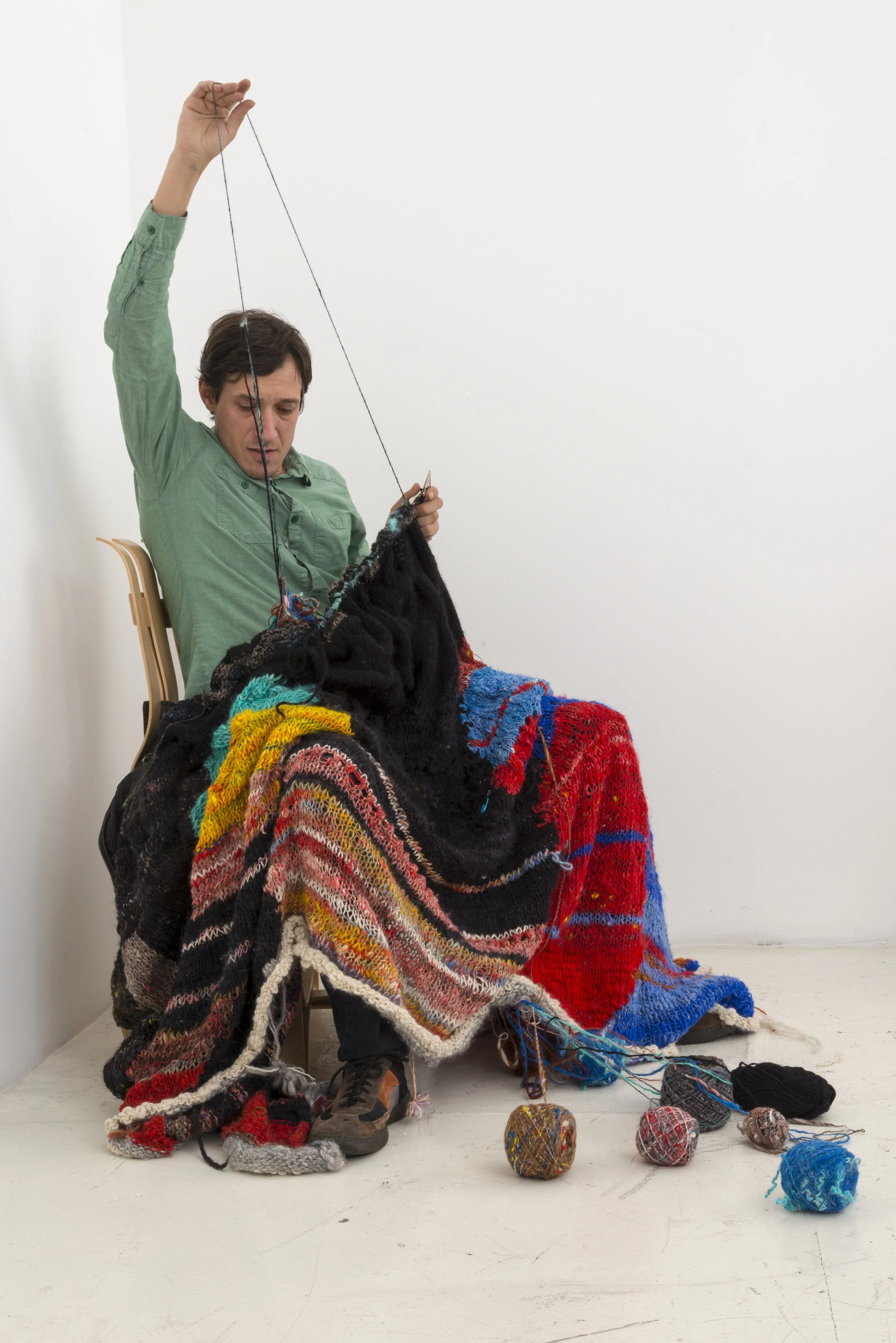
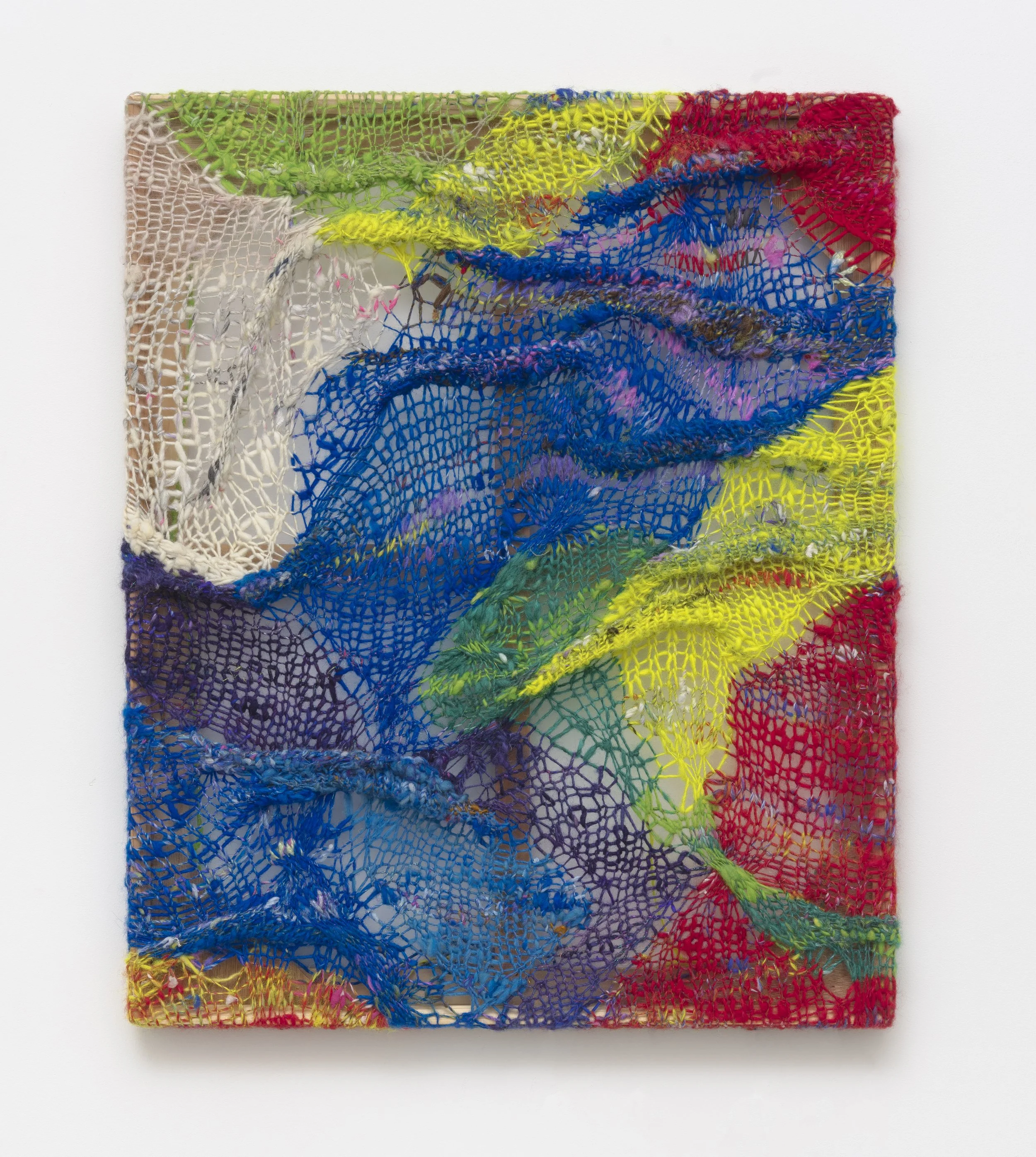
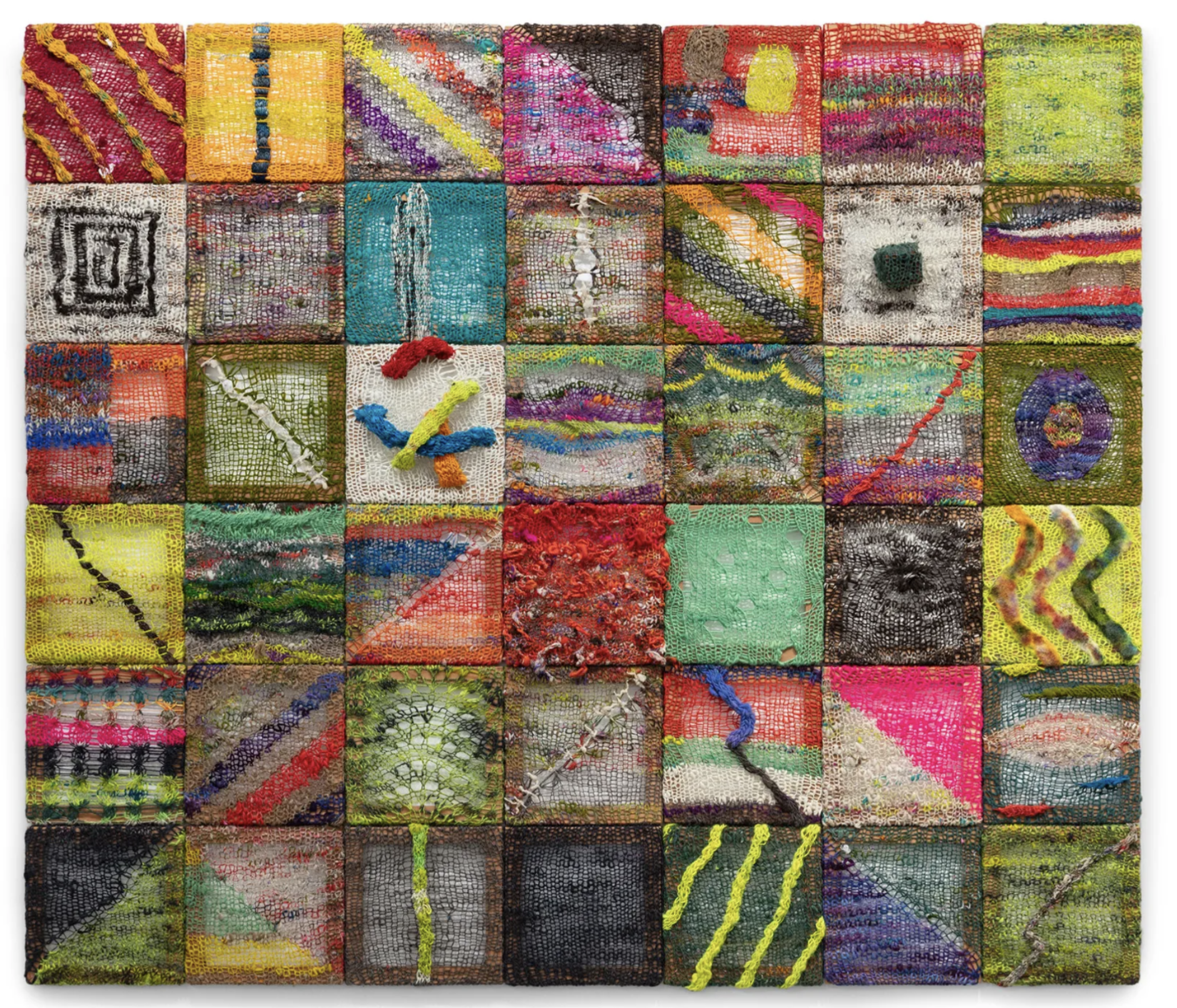
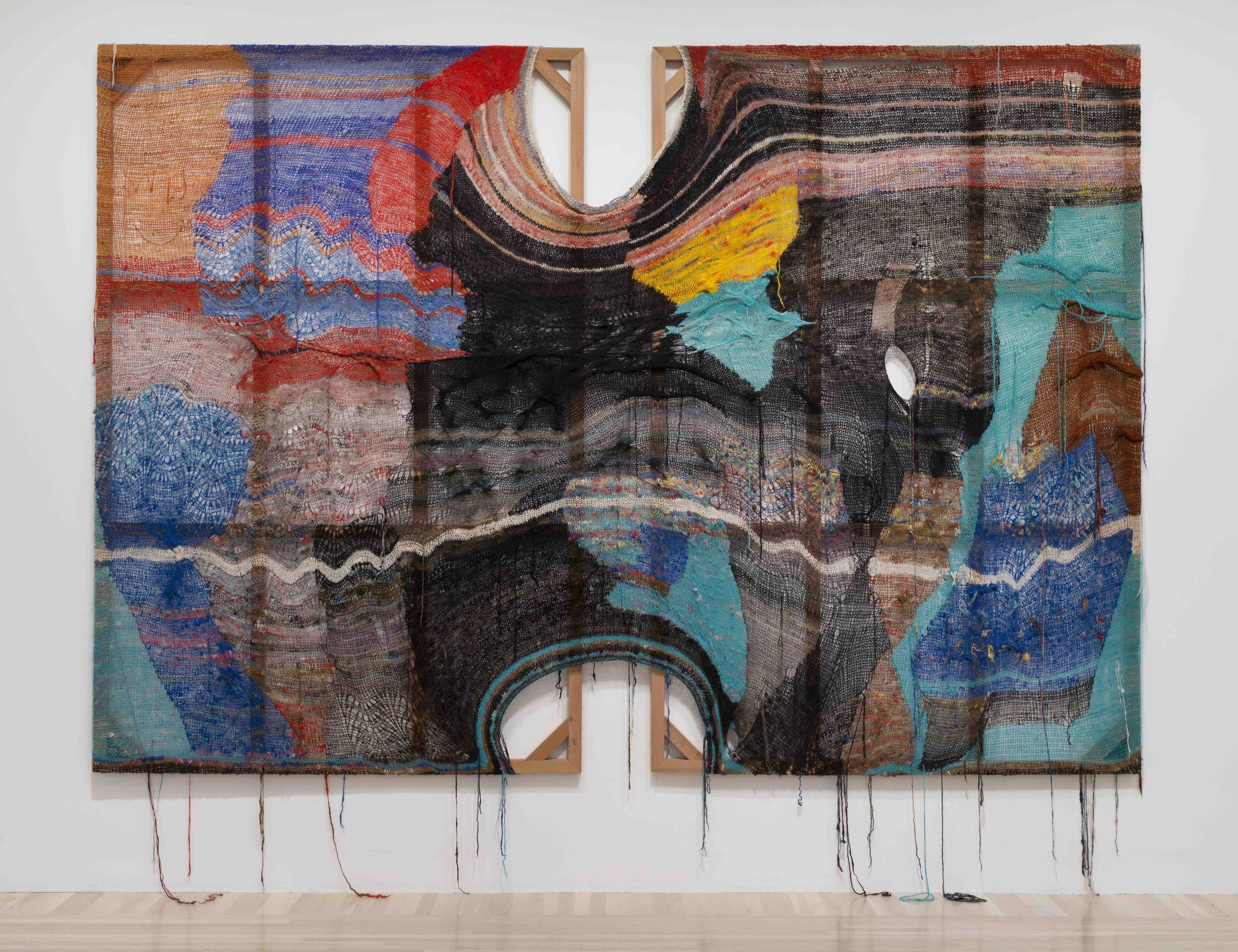
Channing Hansen is an American artist whose work examines the intersection of algorithmic systems, material processes, and perceptual experience. For almost twenty years, Hansen has explored human connection through web-like textiles crafted from hand spun yarn. His process is intricate and labor-intensive— beginning with the collection and dyeing of raw fleece, followed by spinning that fleece into yarn, and only then starting the work that will transform these materials into the Art we identify as a Channing Hansen. The abstract designs are generated by elaborate computer algorithms, resulting in complex webs which can span a wall or fill an entire room. The immersive environment Hansen creates links together technology and craft, the cybernetic and homemade, to produce wonderfully intricate, geometric enigmas in wool.
Beyond the mathematical foundations in his work, Hansen grounds his pieces in environmental causes. He sources the wool for his textiles from conservation-bred sheep to draw attention to detrimental monoculture breeding. Since he is completely colorblind, the pigments used to dye his yarn relies on spectrometry to formulate colors across wavelengths that he cannot see. Uniting an ecologically conscious stance with the cybernetic, Hansen underscores our interconnected place in the universe— be it to the earth itself, a generated world that exists through computers, or the cosmos beyond— and asks us to consider what mark we should leave behind. In this way Hansen subverts conventional distinctions between human and machine labor—between body and data, between the digital and the handmade.