
LUKA CARTER
Showing space tbc
Luka Carter (b. 1990, Los Angeles) is an interdisciplinary artist who lived on a boat for three years in Rockaway Beach, NY, a trailer in Bolinas, CA and plenty of places in between. The friends and community that he finds in each of these places has allowed for a strong, beautiful network of friendship and artistic collaboration, similar to what futurists might call tentacularity - “about life lived along lines, not at points, not in spheres.”
With a background in construction and cooking, Luka has a knack for making space for art in overlooked or interstitial spaces – including an outhouse, abandoned lot, and a van. His practice spans zines, furniture, tattoos, ceramics, clothing, and installations. He recieved a BA from Colorado College and an MFA from the University of Georgia and has been an artist in residence at Eureka!, Chautauqua School of Art, ACRE, and Anderson Ranch. Recent exhibitions include Spill 180 (Brooklyn, NY) Baba Yaga Gallery (Hudson, NY) SCOPE Art Fair (Miami), Baltimore Print Fair, and Manitou Art Center
Artist Statement
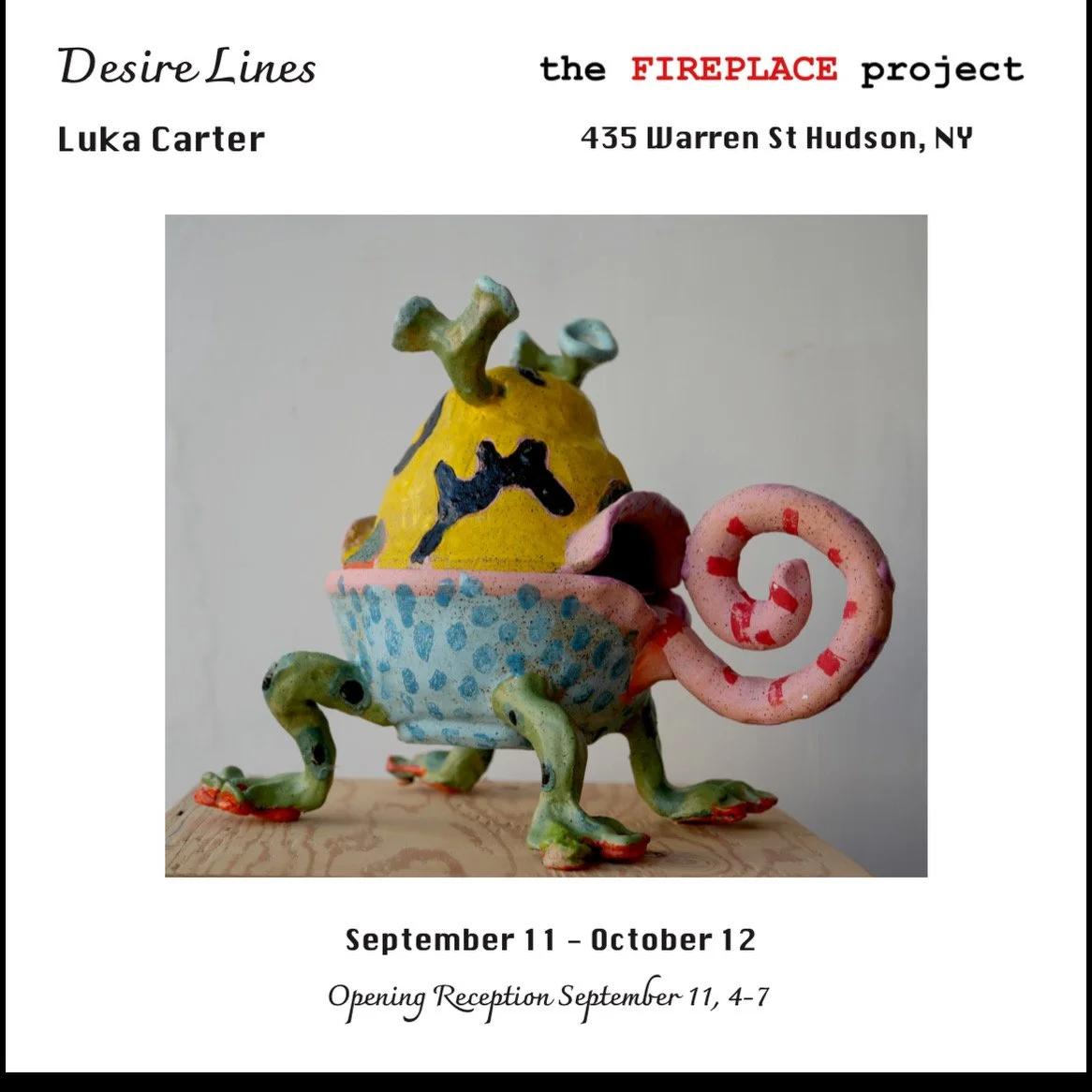
Vessels hold. Cabinets protect. Any form with a lid or a door is an architecture, a shelter. Shift your scale to favor a bug’s, and dwellings multiply before your eyes. Luka Carter’s Desire Lines riffs on the potential of these spatialities, mashing up utilitarian forms to morph perspective and insist on a plenitude of habitats and simultaneities. Infused with an interspecies poetics and Carter’s righteous imagination, every nook yields ridges of possibility.
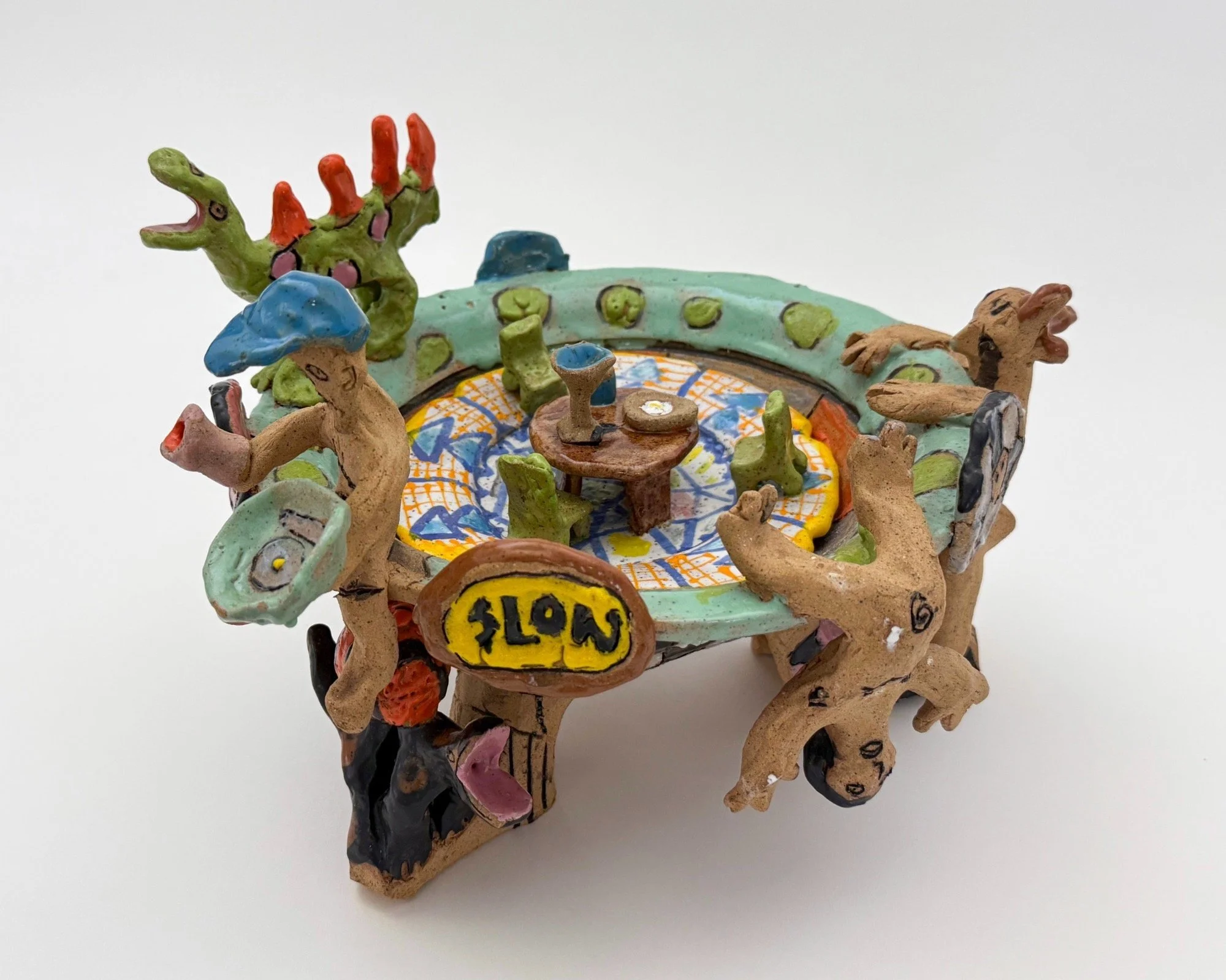
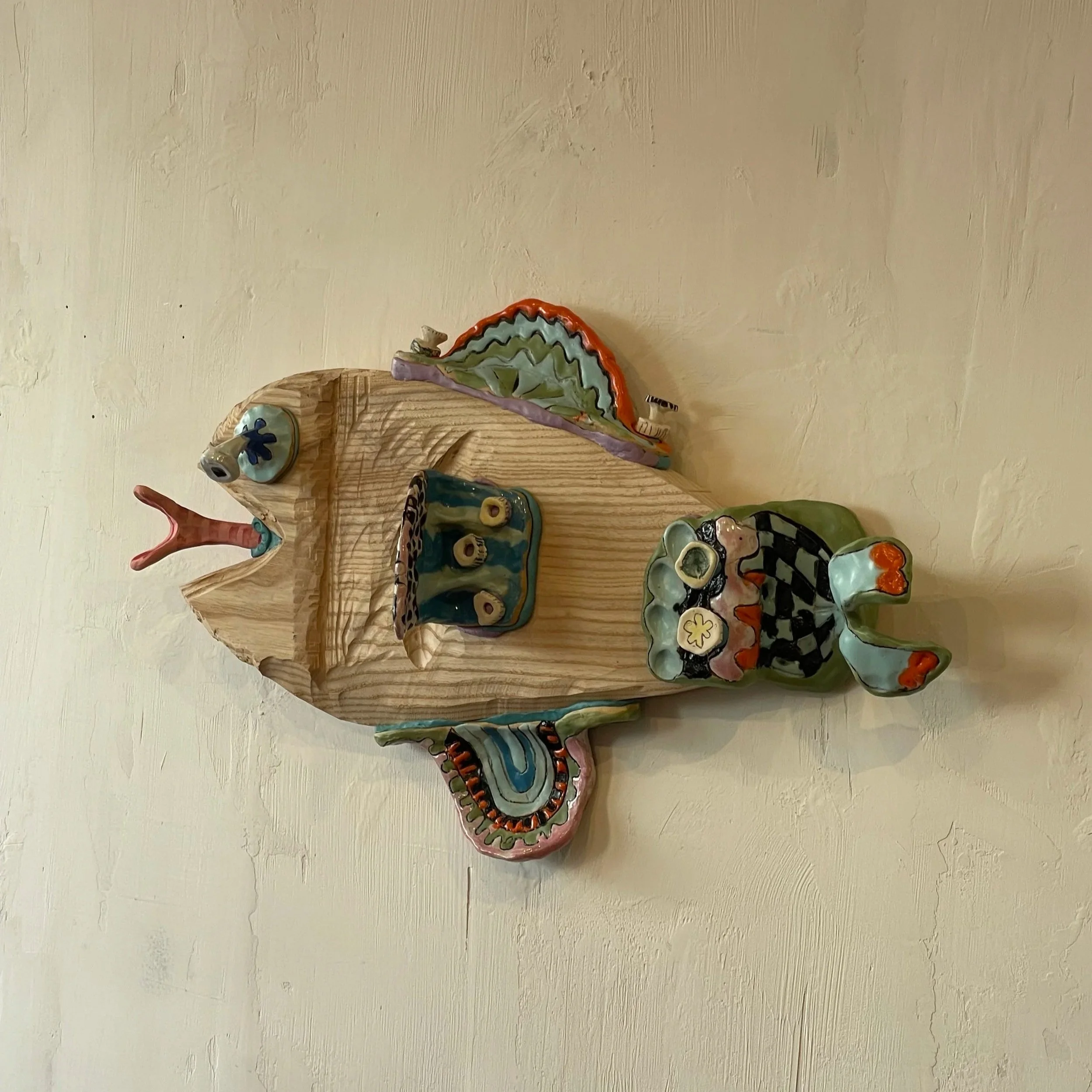
The show centers on a group of ceramic characters, Decoys, who enact trickery in their playful disjuncture between exterior surface and interior portal. They lure—posing, ecstatically, as the cacophonous creatures of a summer pond: turtles, frogs, butterflies, ladybugs, dragonflies, ducks. Buzzing and fecund, the symphony of their high-summer libidinal chants are routed through high chroma palettes and flamboyant patterns. From a distance, these creatures announce themselves as stable entities, seamlessly belonging to the pond’s ecosystem. Nothing unusual to see here!
But camouflaged clues begin to emerge, signaling inner dimensions that betray the coherence of the scene. Inter-locking ceramic bolts imply a constructed mechanics and tempt closer looking. Peaking through slits and seams, one finds there’s no layers of epidermis, no turtle skin beyond the shell, no interleaving of feathers, nor blood and guts. Rather, crevices give way to intimate enclaves and scenes of wild abandon. Inside the frog lies a dining room, where lovingly decorated walls surround a central table and chairs. Nearby, dirty laundry piles up within another bugged-out creature. Alongside these domestic notes, various kinds of wheels evoke movement and expansiveness: a gloopy car traverses a winding road against vibrant greenery inside the butterfly hive. A skate-boarding humanoid rounds the rim of a pool within the turtle. The Decoys treat surface as a site for confusion, so that these sacred other worlds can evade notice.